
 Games are decided on this!
Tagging is such an impactful aspect of winning ball games, yet gets such an inordinately small amount of attention by players and coaches.
It seems simple, yet, good tagging technique requires proper mechanics combined with focused, attentive practice.
Let’s start with the mission:
1) Catch the ball
You can’t tag the runner if you don’t have
the ball.
2) Tag the runner before he touches the base.
This requires efficiency of movement by
the body and glove.
Here is the essential technique:
1) Catch the ball
This is seemingly obvious, but it is clearly not. If a player fielded a ground ball by turning their body sidewise, not moving their feet, then doing the ole’ move where they just jab at the ball with the glove with complete indifference as to whether they catch it, would anyone agree that is correct?
Yet, this happens all the time with tags, and no one gets annoyed.
Just because the fielder is receiving a thrown ball doesn’t mean he doesn’t perform standard infielder technique. Square up, jab step forward and positive action on short hops, jab step back on long hops. Jump or reach for errant throws. The only difference from fielding a ground ball is that after the ball is caught, the fielder swipes the tag. This requires a jump turn to the left – if the ball is in the air at the base, the jump turn can happen before the ball is caught. If the ball is on the ground, then catch it first, then tag with maybe a jump turn jab step.
Oh, and two hands doesn’t hurt either.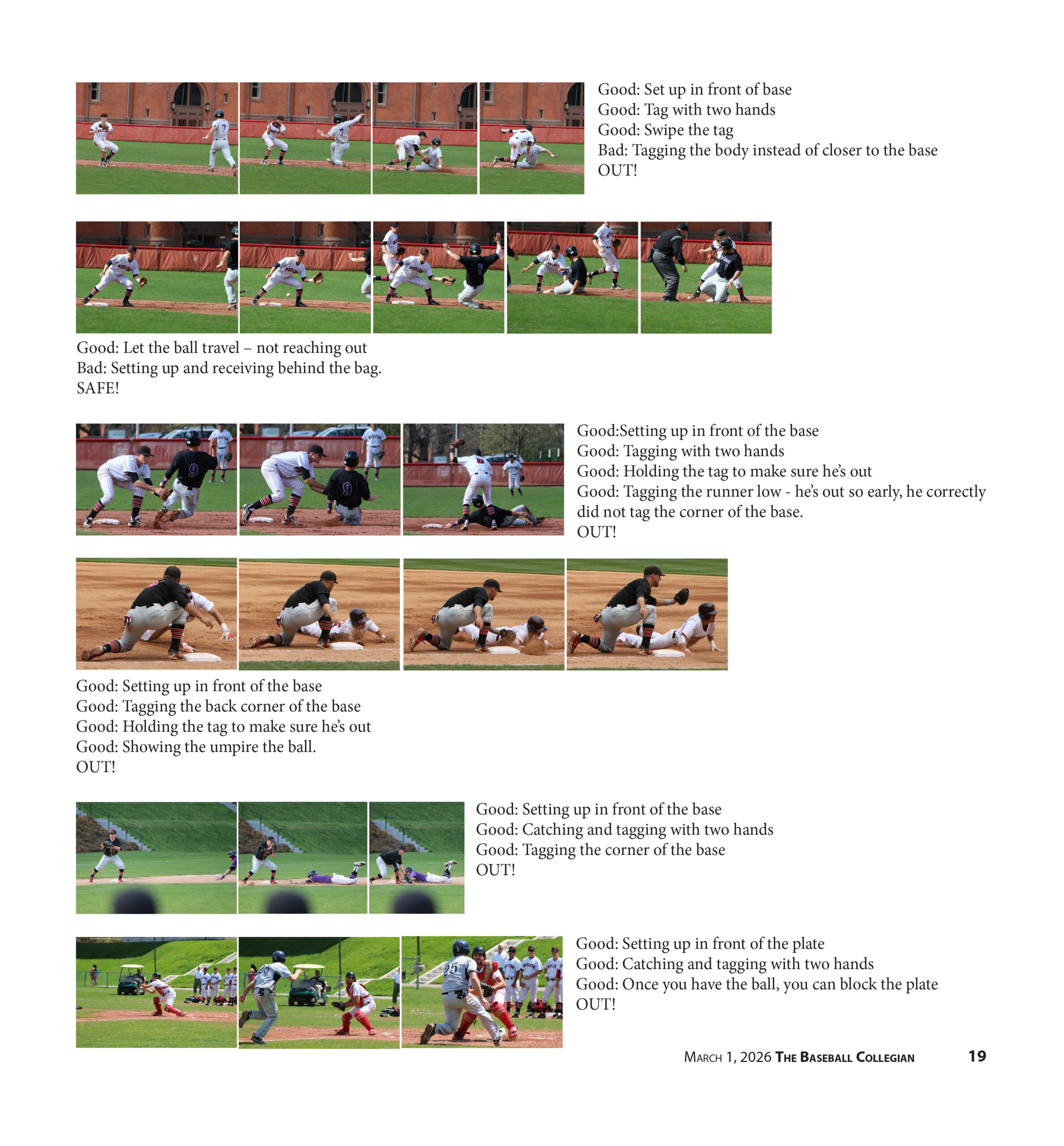
2) Set up in front of the bag
This happens too often at all levels, though less and less the higher you go. Players need to set up on the side of the bag closest to the thrower. At second on a steal, this means just towards the pitching mound. So many players stand behind the bag, and this makes the throw longer, meaning you have to reach forward to tag, or often, the ball hits the runner before even getting to the fielder.
3) Let the ball come to you
If the throw makes it in the air and doesn’t require short-hop positive action, then the fielder should not reach out for the ball and then swipe back to tag. The ball travels faster than a player can swipe, so let the ball travel, then bring the glove straight down to the base to tag.
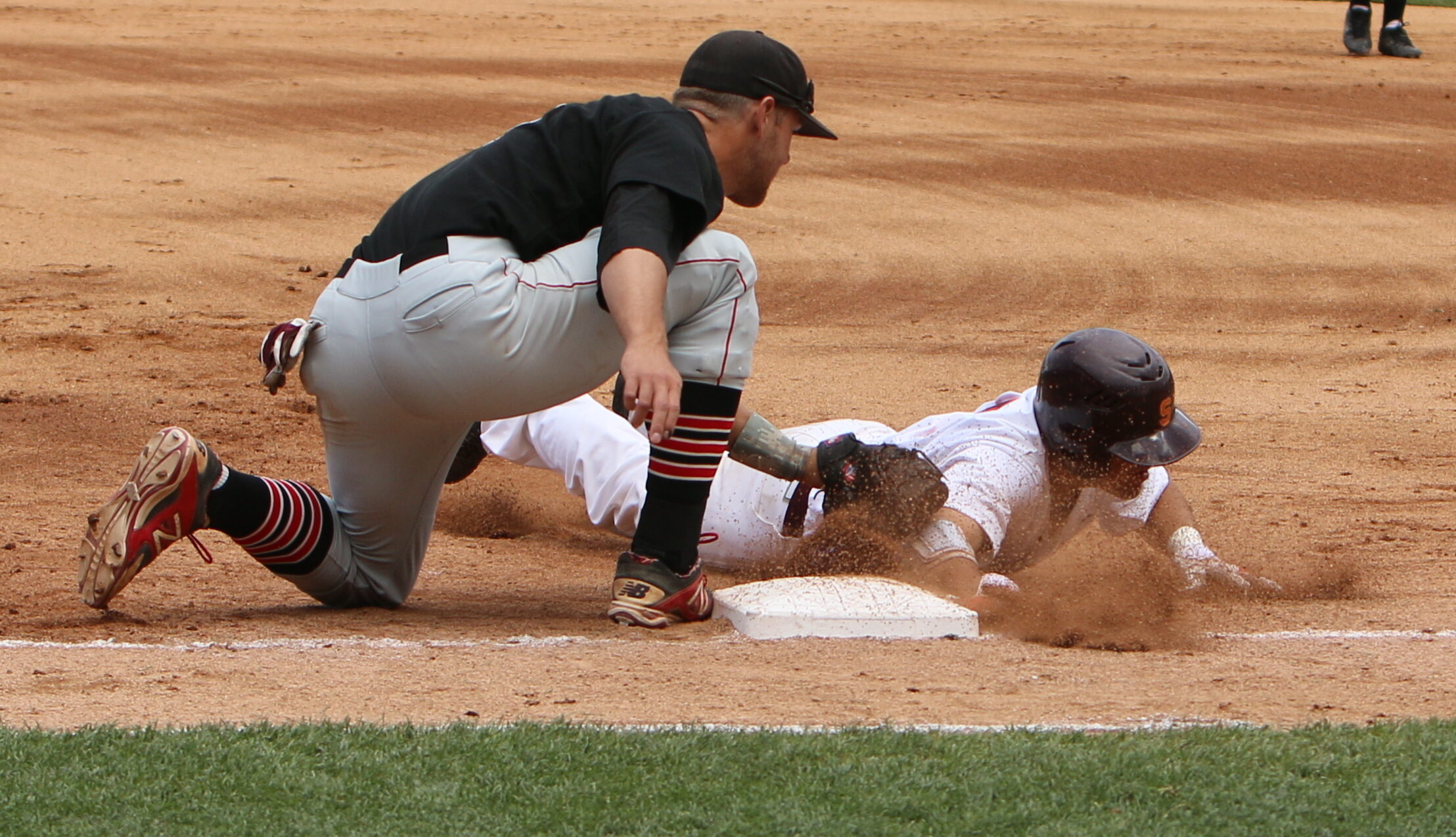
4) Tag the corner of the base
Often, players reach for the runner’s body. This habit has led to an incredible amount of safe calls, and to umpires being confused. The fielder must immediately and directly tag the corner of the base – after all, isn’t that where the runner has to go? The urge to tag the body must be resisted.
Also, tagging with two hands can be effective to make sure the ball stays in the glove. Players should tag with the back of the glove, so as not to have their throwing hand get cleated.
