
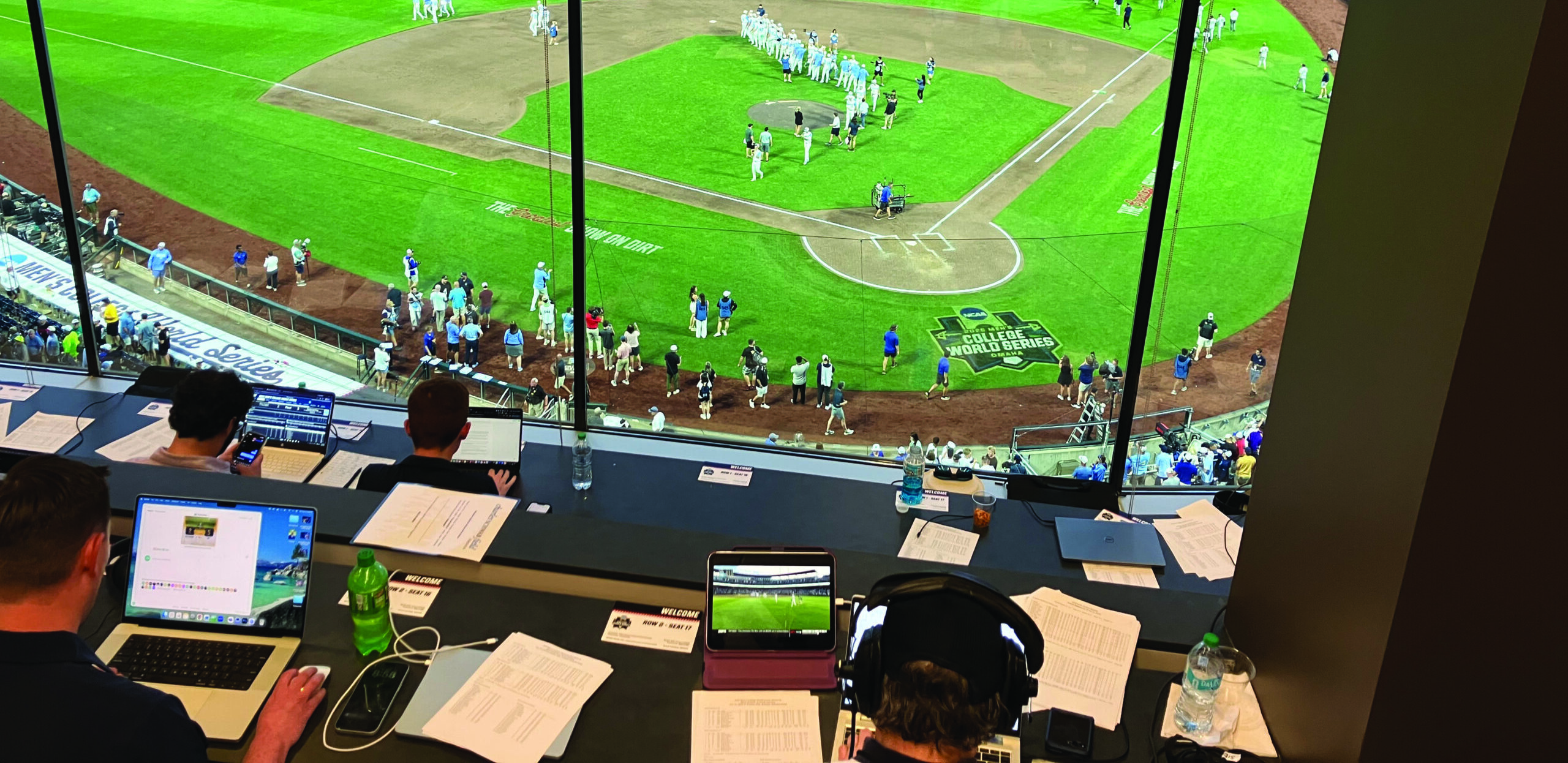
The Press Box series chronicles the great lessons coaches give at press conferences into how they created their championship teams. Featured this month are insights from Mitch Canham from Oregon State in the 2025 World Series, and Corey Muscara from Duke in the 2026 ACC Tournament.
Mitch Canham – Oregon State Head Coach
You ask, “Why Oregon State?” Have you been around the program for a while? You could see real quick this place is amazing, top to bottom. The people that are involved, the way people work. Who cares about an independent schedule or not? What a great opportunity it is. We’ve held that line all year and we’ll do it next year too.
It’s going out and wanting to play the best competition possible. And when we talk to guys and shared the vision about coming to Oregon State, what the expectations are and how we’ll go about our work, and we don’t shy away from what everybody perceives as difficult things.
Those are great opportunities. And we kind of run into the storm because that’s where the best gains in life are going to be made.
You can sit on your couch and play video games all day and never go outside and have someone else pay your bills. Or you can really take on life and do it the right way and go earn that dollar, and then go share that dollar with somebody else as opposed to putting it in your own pocket.
My younger brother taught me that before he passed away. You work your butt off. You treat people with respect. You do the right thing. And you share. You share everything that you have. You share your finances, you share your emotions, you share your wisdom, your grit, and you want other people to share those things as well. Maybe they will, maybe they won’t.
But I know at Oregon State, as I looked at our coaching staff in there, I’m so incredibly proud of these guys because we’re still here. And when I first took the job, everyone tried to come out and rip this place apart.
These guys stayed. They continued to battle and to make this place everything that it possibly could be and everything that we could do.
And portals and NILs and COVID, you name it, all the stuff that comes up, you name it, it’s just stuff. We welcome it. Guess what? There’s probably going to be more stuff that happens next year, or probably tomorrow and the next day and every day of your life from here on out.
Again, I believe opening the windows and the doors and going out and experiencing the world, not hiding in a corner and thinking that everything’s going to be okay. It’s not the right way to live. It’s not the way God wants us to live.
Corey Muscara – Duke Head Coach
Why do you coach?
My life personally is to use baseball as a vehicle for these guys to be the best versions of themselves.
I really loved baseball when I played it. I had a lot of coaches. As a player, I felt like if I could have some continuity, consistency and understanding of what I was trying to do, then I could make an impact for others.
The funny thing is, when I started doing this, my dream was to coach at Southern New Hampshire University, which is in my hometown. Ironically, that’s where I had my first job as an assistant for Coach [Scott] Loiseau. It’s never been about being a head coach in the ACC, or being in Omaha. It’s literally always been about how can you help kids. That’s because the game gave me a lot, and I wish I had some continuity, and that’s where it all started. And it’s been born into this, 17 years later.
Sometimes in life, people make the result everything, and they don’t actually learn from the process along the way, and they miss all the valuable things that they get from it. It’s easy to do that in college athletics. It’s easy to do that when everything is about the win and the loss.
But the reality is the win and the loss is how you handle your process every day. How you treat people. You can be competitive as hell in an environment to try to teach somebody a lesson and get somebody to understand something. I think sometimes all we focus on is the game and the result of the game, but the whole thing with sports is every day is an opportunity to learn something. That’s why I do it.
I like building teams, I like guys being better versions of themselves. I like helping myself grow, my coaching staff grow. I’m interested in building all aspects of a program. If I just wanted to continue being a pitching coach, I would have stayed doing that because it was easier. A lot of my mentors told me I was crazy to go be a head coach. And they’re not wrong because there’s a lot more that’s on your plate. I’ve always liked challenges. This job allows you to do all those things.
