
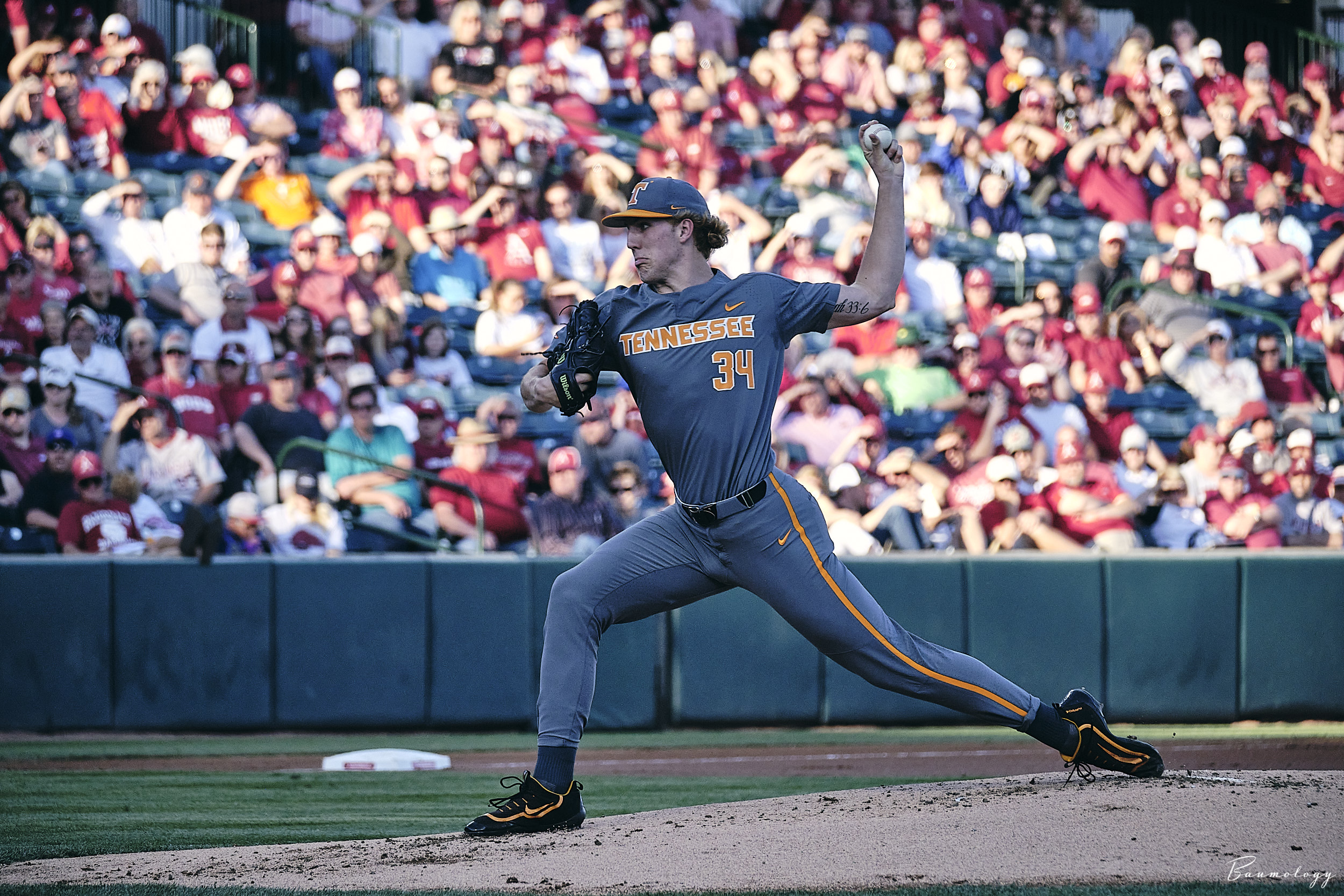
Five acclaimed experts on the craft of pitching have come together to make their voices heard on the state of pitching in baseball. Their insight into the source of becoming an elite pitcher is inspiring as the game confronts a crossroads on how to keep pitchers healthy and performing well.
Duke Dickerson was a former record-setting pitcher at Virginia Tech who helped guide the Hokies to two NCAA Division 1 Super Regionals. He signed with and played in the Toronto Blue Jays organization, then served as field staff with the New York Yankees organization. He is currently pitching coordinator at Capital University (Columbus, OH), Special Advisor to the Solingen Alligators Baseball Club of the German Bundesliga, and an American Baseball Coaches Association (ABCA) Ambassador.
For nearly a generation, velocity has been viewed by aspiring young pitchers as the Holy Grail, the ticket to the paradise of pitching. The unfortunate thing is that many of these young pitchers and “their keepers” forget one thing, and that one thing is the genesis of this art, perhaps the most important thing in achieving optimal pitching success: How to pitch!!!
Somewhere along the way, the art of pitching was lost in the shadows to breaking the sound barrier with velocity. A textbook example of putting the cart before the horse! In today’s era, the premise, the basic DNA of how to pitch, has become nothing more than a second thought, forgotten… dust in the wind. Why would you expect anything different? The revenue generated by athletic instruction in the youth space in the US is expected to exceed $50-billion… the same GDP of the country of Jordan. Chaaaa-ching!
Throw in the rising epidemic of arm injuries, e.g., UCL, labrum, etc., surgical repairs, rehabilitation, these are not particularly favorable outcomes, especially for young pitchers. A specific study found that approximately 27% of elite high school pitchers who participated in showcase events went on to have UCL reconstructive surgery. In a recent study published at the National Institute of Health (NIH), a total of 13,894 pitchers met inclusion criteria and were found to have a diagnosis of UCL injury. Most injuries (64.6%) occurred in young pitchers aged <20 years. For the math impaired, that is two out of three young pitchers under the age of 20-years-old. And let us not forget the labrum!
Health care costs for pitching injuries, specifically UCL and labrum, account for over $100 billion, and the non-measured mental meltdown and emotional fallout of these young players is felt for decades. Tell a young pitcher he will never pitch again. However, at the end of the day, it’s not about playing the odds with a young person’s dreams, rather… show me the money! Two industries… over $150-billion cost and thousands, if not hundreds of thousands, dreams destroyed. Youth athletic training (and dream building) is the latest gold rush.
So here’s the rub. Like any shiny new toy and the age-appropriate guidelines clearly displayed on the box, “these guidelines and directions for assembly” are often disregarded in favor of “let’s play now.” Inevitably, the lack of time (and patience) required to learn how and why it works, gives favor to the excitement of “break it out of the box and let’s play with it now” mentality.
This common mistake of “not reading the directions and age appropriateness,’ as we all know and have experienced, will most often lead to the frustration and/or disappointment and the next step for the shiny new toy… Facebook Market Place, Ebay or soccer.
Matt Davis, a scout with the Boston Red Sox best summed it up in saying, “There are over 15,000 right-handed pitchers today in America who throw the ball 92+ mph.” These young pitchers may not know how to pitch, however, they can wing it 92+ mph. Matt’s observation (and so true)… “What makes any one of these guys any different, any better, than the other?”

Mark Leiter wore an MLB jersey for 11-seasons. A right-handed pitcher for eight different teams, including the Detroit Tigers, San Francisco Giants, and Philadelphia Phillies. His famous baseball includes his brother Al Leiter, his son Mark Leiter Jr. who pitches for the NY Yankees, and his nephew Jack Leiter who pitches for the Texas Rangers. They represent the first time in MLB history two brothers who played in MLB both have sons in the league. Today, Leiter owns and operates Leiter Advantage, one of the top pitching schools in the U.S.
The answer… work ethic, mental aptitude/approach, mechanics, coachability, “performance and production,” etc., all critical variables in the assessment and evaluation process. One thing that may put this concept into perspective is the MLB draft.
If the MLB draft has 600 selections each year, and every single draft pick was a 92+ mph right-handed pitcher, that would translate to .04%, i.e., less than one-half of one percent of all 92+ RHPs, i.e., 15,000, in the US today. You stand a better chance of being bitten by a shark! Do the math… listen to the music, as pitching and playing the piano have a lot in common.
Regarding the latter, important aspects of learning piano include regular, patient practice, understanding music theory and scales/chords, developing ear training and sight-reading skills, learning proper hand technique and posture, and acquiring a suitable instrument and learning resources. Consistent, mindful practice tailored to your level, along with a good teacher and/or resources, is key to building muscle memory and musicality… to “learning” how to play the piano.
Pitching is no different. Mechanics, patient practice, understanding the geometric aspect and physics of pitching, learning grips, balance, posture, arm action, optimal acceleration and deceleration, release points, finish, etc., along with a good teacher and resources… building muscle memory through repetition, etc.
At the end of the day, just because a person has a piano doesn’t mean they are a piano player, just as velocity does not define a pitcher. Velocity is the dessert that follows the meal!
Whether it is the piano or pitching… it takes time. Chop sticks or Beethoven’s 5th? Being an efficient and effective pitcher, or am Ebby Calvin “Nuke” LaLoosh? Not to sound like a broken record, however, music and pitching, like life, are similar in nature in that, what you put into is what you get out of it.
The Repetitions of a Pitcher
Young pitchers in many cases have not been taught or worked on the monotonous pain-staking repetitions in all aspects of pitching that are required to become an efficient and effective pitcher. Pause and play again… this includes fundamentals, technique and proper mechanics. Writing a check for $5,000 does not make the pitcher.
The directions that come with pitching, with becoming an efficient and effective pitcher, rival that of post-graduate training. They are not easy, it takes time, countless repetitions, a healthy dose of failure (which proves critical in the learning process), and patience. Rome wasn’t built overnight, nor will a pitcher be. Too much involved and too much out of the control of the pitcher and/or the “pitcher’s keepers.”
The Clinician’s Guide to Baseball Pitching Biomechanics (nih.gov) is a must-read clinical study written by Alek Z Diffendaffer, MS, Glenn Fleisig, PhD, et al, of the famed American Sports Medicine Institute in Birmingham, Alabama, the Mecca of pitching mechanics. The study explains in detail the urgent need to return to the basics of pitching… the mechanics. Based on science, the facts… a good understanding of proper pitching mechanics is critical to develop and prescribe a sport-specific strength and conditioning program aimed at preventing injury, increasing performance, and increasing health and longevity.
Paul Hartzell pitched a total of six years with the California Angels, Minnesota Twins, Baltimore Orioles, and Milwaukee Brewers. A swingman, starting 77 of the 170 games, he completed 22 games, while posting 12 saves, a statistical combination difficult to imagine in today’s game. In his maiden season, Hartzell was 7-4 with an ERA of 2.77. Today, Hartzell has joined Mustard (mustard-baseball.com), an organization dedicated to pitching mechanics and player development, co-founded by legendary pitching coach, Tom House.
Pitching and the Investment of Time
Anatomy, physiology, psychology, and perhaps the most important variable that our “must have it now society” calls for… time. Time is money, and the investment of time for a pitcher’s proper development is of critical importance, as this investment to his craft will play a pivotal role in his outcome… his success or failure.
Time is a young pitcher’s currency. Short-term gains generally lead to long-term losses, whereas short-term losses typically give way to long-term gains. Band-aids or sutures. Short-term gain… or long-term gain? Ray Kinsella said, “Go the distance.’ Learn the “soup to nuts” of pitching. Time. Take the time to learn how to pitch. He who has the time, who can, will “invest that time,” and has the will and the way, will stand the best chance of getting a check from Topps one day.
Pitching is a rather simple process, as it is determined by hitting. Hall of Fame pitcher Warren Spahn is credited with the saying “Hitting is timing, and pitching is ‘screwing up’ a hitters timing.” It truly is that simple. Spahn, Koufax, Gibson, Ryan, Seaver, Carlton, Santana, Kershaw, etc., all of the greats, would echo that same sentiment, that same process. Period.
Greg Maddux and Art of Pitching
The definition of a successful pitcher may be best defined by one of the greatest pitchers of a generation… perhaps of all time, Greg Maddux. He had an exceptionally low career walk rate of 4.9%, and was the only pitcher in MLB history to record more than 300 wins and 3,000 strikeouts with fewer than 1,000 walks. He issued just 999 walks in his entire career. He also holds the record for the most starts (236) without issuing a single walk. Absolutely, insane! If a young pitcher wants to be motivated, add Greg Maddux to your Rolodex! Do you want a pitcher… a role model? Look no further than Greg Maddux.
A Maddux fastball in the pinnacle of his Hall of Fame career was 89-90-mph with extraordinary run in on the hands of a hitter. His 78-80mph change-up, i.e., 10-mph variance in velocity, dropped dead at the tip of the plate (of which 34% of all MLB hitters would swing over for strikes)… and his 83-84-mph slider/slurve/sweeper thrown with surgical precision low and away had a such a devastating bite, it would leave hitters scratching their heads. Maddux defines a pitcher… the art of pitching.
A 90-95 mph fastball, with a destination unknown, does not define a pitcher… rather a thrower, and a potential candidate to join the accelerating A-list of ulnar collateral (UCL), and/or labrum issues, etc. that appear to be at near epidemic proportions. Why?
In addition to the required fundamentals, technique, posture and mechanics required to be an efficient and effective pitcher, young pitchers need to understand the simple physics (and math) required to be an efficient and effective pitcher, and once that epiphany has been experienced, that “ta-da moment” occurs, the birth of a pitcher begins.
The Pitcher’s Direction
The objective? With disrupting a hitter’s timing the primary objective, the secondary objective is using the tools of nature to achieve success. With a 9.25-inch orb in the hand, a pitcher’s objective is to “chuck” that horsehide with the greatest accuracy possible to identified coordinates, i.e., “control and command,” determined by the “control tower, i.e., pitching coach, catcher, both.” Hit the target!
Mike Butcher is former relief pitcher with the California Angels and a highly successful MLB pitching coach who spent 14 seasons with three different teams (Tampa Bay Rays, Los Angeles Angels and Arizona Diamondbacks) before retiring in 2019. Today, he and his wife are the owners of The Pizza Butcher in Gilbert, Ariz. (thepizzabutcher.com). The best pizza on the planet! Let him know you read this article, and you may get a discount!
This process is executed from a platform that is 24-inch wide (rubber) on a 10-inch high “launch pad” (pitching mound), 60-feet 6-inches away from a 17-foot wide target, aka, home plate. The principle that a straight line is the shortest distance between two points was first articulated by the world’s first pitching coach, Greek mathematician and physicist Archimedes, and this process serves as the cornerstone of pitching and pitching mechanics. Point A, i.e., the mound, to point B, i.e., the target, i.e., homeplate, in the most efficient and effective manner. Throw in a little Galileo inertia, and Einstein magic potion of energy (velocity) equals mass (weight) plus speed (arm speed) squared, i.e., E=M+C2, and voila’, you have the making of a pitcher!
The more confusion around the simplicity of Archimedes magic formula, Galileo’s uniform motion in a straight-line theory, and Einstein’s velocity theory, the more challenging the objective will be to meet. Target acquisition, balance, acceleration, deceleration, release point and finish. Point A to point B using physics and geometry as a roadmap. As the great Japanese pitching coach Mr. Miyagi said, “Wax on, wax off.” Keep it simple!
The issue this brilliant panel of former pitchers and authors sees is embedding into the minds of these young pitchers (and their keepers), the work, commitment to excellence, the determination, dedication and desire to plan and prepare…to read the directions, to follow the directions of this shiny new toy.
The Remarkable Billy Wagner
Billy Wagner, a recent (and deserving) addition to the National Baseball Hall of Fame, serves as a model for most developing pitchers. With Maddux defining what good looks like, Wagner, is the epitome of the “how, why, when and where” in a becoming a pitcher.
In high school, Billy Wagner stood 5-foot-5 and hit the scales at 135 pounds. His fastball was clocked in the sub-80s… maybe. Wagner was considered too small for a pitcher, which led him to a small, very small college opportunity in Virginia at Ferrum College. (NOTE…Billy, you know Bob Humphreys desperately wanted you at Virginia Tech, right?)
En route to reaching 5-foot 10-inches and 185 pounds during his professional career, Wagner’s Hall of Fame plaque was the result of an exceptional work ethic, mental toughness, and a relentless commitment to planning and preparing. These traits were forged from his childhood and helped him overcome physical limitations to become one of the most dominant left-handed relief pitchers in history.
Wagner’s intensity was evident from a young age, as he spent countless hours in his backyard replicating the perfect pitching motion. He was dedicated to his craft, meticulous about his pitching mechanics, which were critical to his ability to consistently flirt with 100 mph while in the limelight of baseball’s cathedrals, despite his smaller size. Even after retiring, Wagner emphasized that his delivery was not luck, but a blueprint, the leitbild for elite performance achieved through precise and intentional practice. Rinse and repeat… Billy Wagner was meticulous about his pitching mechanics.
Mentally “there,” beyond his physical gifts, Wagner possessed immense mental preparation. As a closer, he understood that he was “one pitch away from scrutiny” and thrived under that pressure. In his own words, his physical talent was important, but his mental readiness is what made the difference. Machiavelli would have been proud! Rinse and repeat… Wagner possessed immense mental preparation and readiness and had no mercy on those who stood 60-feet, 6-inches away.
Wagner overcame obstacles by embracing challenges. He defied expectations and never stopped working. He has stated his success came from refusing to give up and working hard, ignoring outside critics. The Hall of Famer was driven by perseverance, grit… and the pursuit of perfection, and perhaps the greatest pearl of wisdom in the Billy Wagner story was his ability to let go of failure.
Baseball is, and always will be a game of failure, and if a pitcher is unable to let it go, to forget about the last hitter, last inning… or even the last game, regardless if it is a win or a loss, coughing up a game winning home run or issuing a free pass to allow the winning run to score, the failure of letting go will consume the player like flesh eating bacteria!
The Pitching Solution
So, what is the solution to becoming a complete pitcher? Whereas velocity obviously plays a role, it is clear that velocity, whether you are throwing a baseball or driving a Formula 1 race car, can lead to unfavorable outcome, i.e., crashing. If a pitcher or driver is uncomfortable, unable to control and command the baseball/car and remain consistent in doing so lap after lap, pitch after pitch, kaboom… the crash happens.
The complete pitcher has arrived when competitiveness, comfort, control, command, consistency and confidence are experienced. C-ing is believing. Without the 5 “C’s,” efficiency and effectiveness, the complete pitcher is forbidden fruit, and the risk of failure, or in more positive terms, the chances of success, are severely limited.
In the simplest terms, a competitive pitcher, with comfort, control, command, consistency and confidence serving as the foundation on which to build a pitcher, with hard work, dedication and commitment to the craft embraced… velocity, movement/run, and the all-important mental aspect of pitching will be explored and experienced throughout the process, and at that time, the one-in-15,000 odds of playing in college are extraordinarily favorable, and the prospects/possibilities of getting a check from Topps are more probable.
Competitiveness, comfort, control, command, consistency and confidence… What you put into it is what you will get out of it. And what is it? The complete pitcher.
