
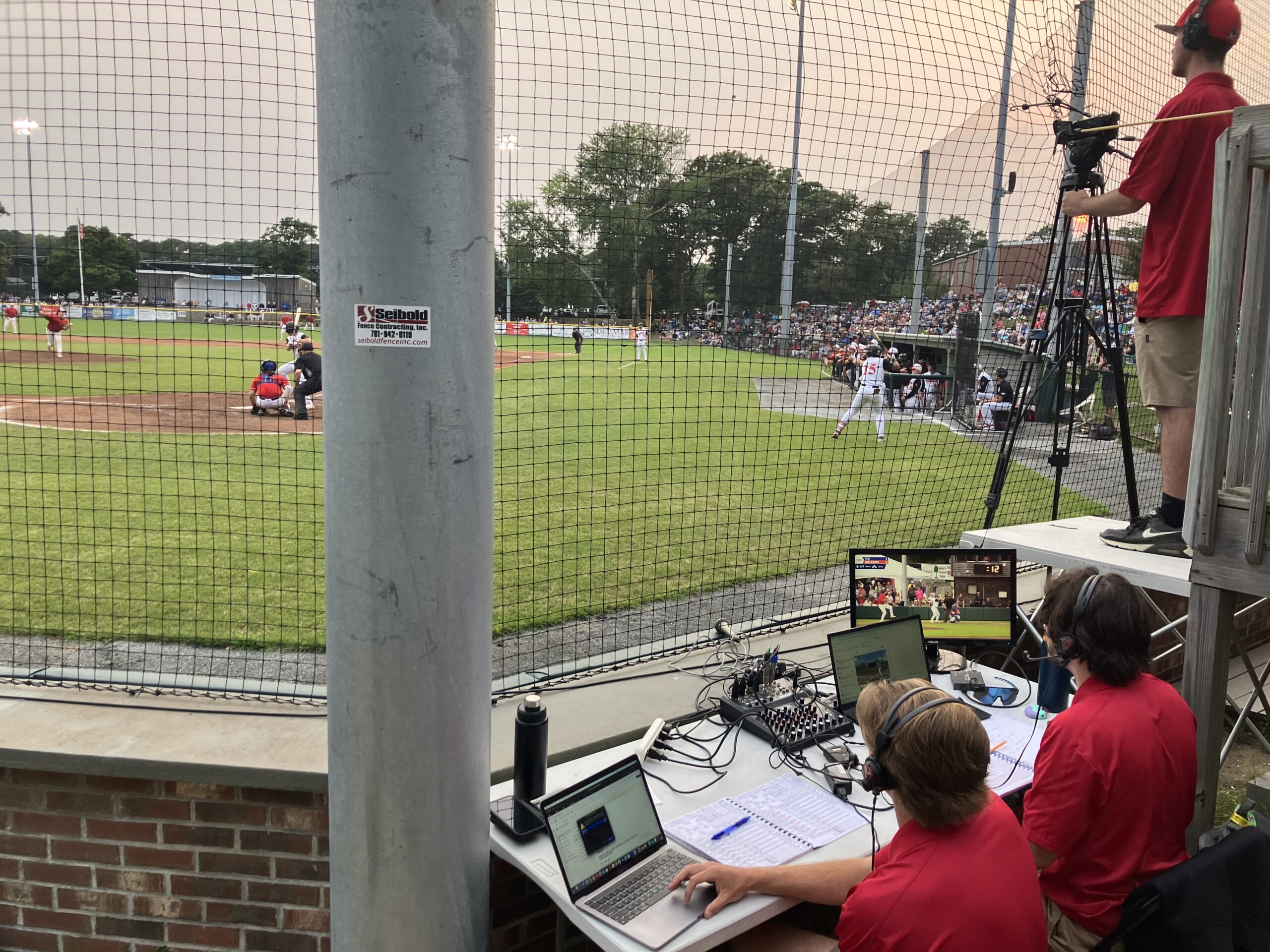
I think my college baseball team broke more than 30 tripods this century. Not bats – 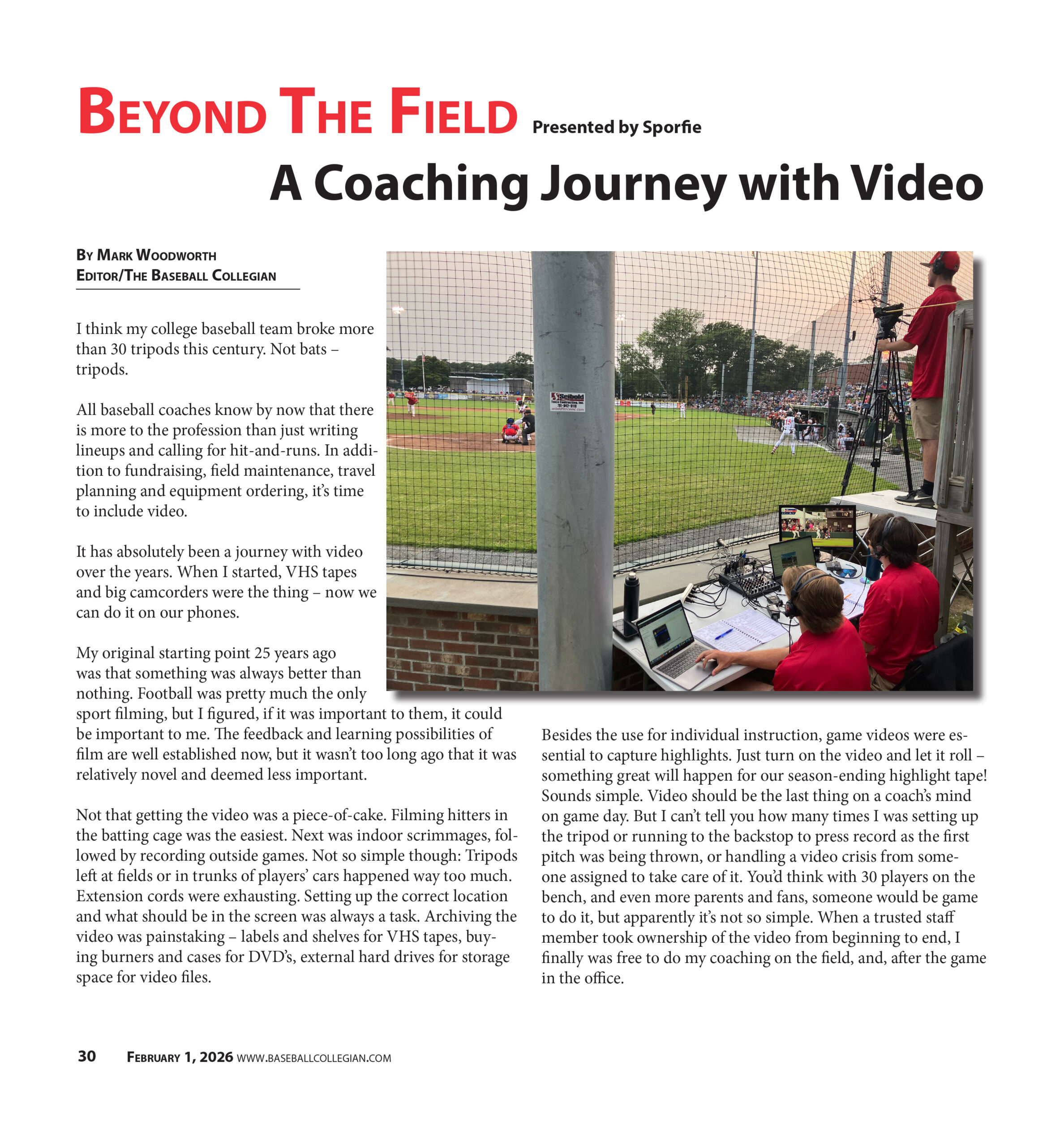 tripods.
All baseball coaches know by now that there is more to the profession than just writing lineups and calling for hit-and-runs. In addition to fundraising, field maintenance, travel planning and equipment ordering, it’s time to include video.
It has absolutely been a journey with video over the years. When I started, VHS tapes and big camcorders were the thing – now we can do it on our phones.
My original starting point 25 years ago was that something was always better than nothing. Football was pretty much the only sport filming, but I figured, if it was important to them, it could be important to me. The feedback and learning possibilities of film are well established now, but it wasn’t too long ago that it was relatively novel and deemed less important.
Not that getting the video was a piece-of-cake. Filming hitters in the batting cage was the easiest. Next was indoor scrimmages, followed by recording outside games. Not so simple though: Tripods left at fields or in trunks of players’ cars happened way too much. Extension cords were exhausting. Setting up the correct location and what should be in the screen was always a task. Archiving the video was painstaking – labels and shelves for VHS tapes, buying burners and cases for DVD’s, external hard drives for storage space for video files.
Besides the use for individual instruction, game videos were essential to capture highlights. Just turn on the video and let it roll – something great will happen for our season-ending highlight tape! Sounds simple. Video should be the last thing on a coach’s mind on game day. But I can’t tell you how many times I was setting up the tripod or running to the backstop to press record as the first pitch was being thrown, or handling a video crisis from someone assigned to take care of it. You’d think with 30 players on the bench, and even more parents and fans, someone would be game to do it, but apparently it’s not so simple. When a trusted staff member took ownership of the video from beginning to end, I finally was free to do my coaching on the field, and, after the game in the office.

One day, I heard about webcasts in their nascent stages. In the quest to help the players get better in small ways, I received permission from our S.I.D. to talk to our school’s IT department about broadcasting a game live. They went to work on it – I do remember the whole idea almost fell apart when they determined their servers couldn’t handle more than 50 live streams at a time. Thankfully, our first live webcast didn’t have that many viewers, and thus was born our athletic department’s live game video iniative, which has now turned into broadcasting all home games live in all 30 sports (as do most college programs).
That has become a full production process, but there was still a gap – especially in baseball. Video was hard with all kinds of different field setups, tournaments, neutral-site games, nobody to be an in-game producer. One solution I found was in Little League. Our town had a 24/7 live streaming video camera on the fence behind home plate – for a coach watching their kids while on the road with their own team was incredible.
That inspired me to broadcast my small college games on our spring trip. No one was doing it – surprisingly no one still does. It was work – tripod, extension cords, chargers, shielding the sun, setting it up, and even one broken iPad due to the wind (or maybe poor tripod placement?) But it was instrumental to our program for alums and parents and players around the country to see what was going on in real time. Our small college averaged 150 viewers, but for those 150 viewers, it might as well as have been the Super Bowl.
Broadcasting spring trip games quickly became an assumed element of our program, thus no going back. But I learned something throughout this quarter-century experience. While recording baseball videos started primarily as an instructional tool, the benefits became far greater. I believe offering the immediate live game experience, as well as being able to re-live the game later, yielded great dividends in demonstrating our program’s commitment to providing a great experience. The players loved the instant feedback, the parents and families loved seeing their kids play (whether they were there or not), and alums and random fans were able to able to be dedicated followers.
Baseball video is a part of the landscape now, and a broken tripod here or there is worth it for coaches and programs on so many levels.
