
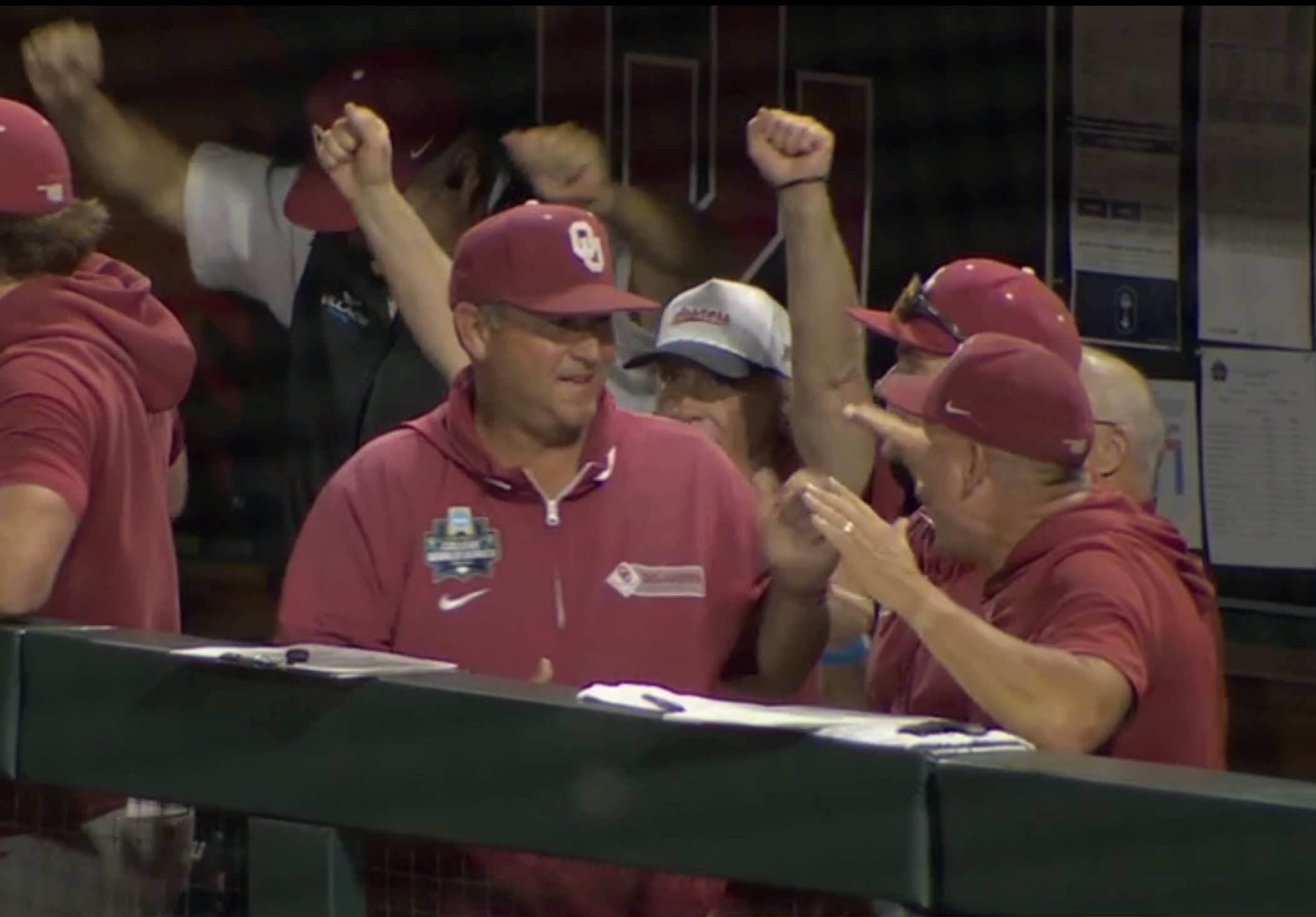
The first in a series chronicling the great lessons coaches give at press conferences into how they created their championship teams. Featured this month are insights from newly-minted CWS champion coach Skip Johnson from Oklahoma and North Carolina coach Scott Forbes.
Skip Johnson – Oklahoma Head Coach
It’s uncommon at every level. I mean, from Little League all the way up. When their kid’s not playing, all they hear is the negative energy.
These guys really have been selfless. And that’s probably one of the most important things, the message that I’ve really tried to display about this team is the selflessness that they’ve had in a world that’s really selfish. And we’re trying to teach them in our culture to be selfless, to pick each other up – I mean, it’s really what life’s about.
Man, if you can teach those young men to be selfless in a selfish world, is really big to me.
When nobody cares who gets the credit, you can do amazing things. It’s pretty amazing. They’re pulling for those guys, the first guy on the rope.
A lot of times when you get in these pressure situations, they give you too much effort. They try too hard. When you try hard in this game, you fail. But if they can just be themselves, one pitch at a time, take a breath, throw the ball to the target — because that’s the only thing you can control — or get your first step, or have the detail of reading what we need to read on the bases or at the plate, two-strike approach, and believe in that process, the process is what matters, more so than anything.
It’s really just trying to stay in the process one pitch at a time. It’s the only thing you can control. You talk about it. You try to live it. You practice it. You put it in your routines.
I mean, if you sat next to our dugout, you can hear me scream, “Take a breath, take a breath,” trying to remind them, take a breath, trying to remind them to stay in the routines.
It’s not any different game playing for the national championship. It’s just about trying to win pitches; swinging at strikes, not balls; trying to throw the ball to targets. It’s not any different. It’s just on a different stage. You just gotta look at it that way. I mean, we all think it’s different because we write about it and we’re in social media, but it’s really not any different. The bases are still 90-foot. You’ve got to run good 90s, and still 60-feet, 6-inches. You’ve got to just take a breath, back the ball up to the middle, make sure you’re ready to make a play, attack the play and give effort.
Scott Forbes – UNC
If you’re a transformational coach or trying to be — it doesn’t mean we’re perfect — it seems like they become an even closer family. And that’s something that’s so important to us at UNC that the players feel that.
We use the word “love” all the time as the backbone of our program. I explain to our guys, there’s some tough love in there, but it’s the strongest thing on the planet.
We like to think that we try to make practice harder than the game. I think that’s important. This time of year, like yesterday, we had the machine cranked up and it was throwing cheese. You’ve got to be ready to get in there and compete. We always preach to our players, we’re going to try to make practice as difficult as possible. Buy into it. Understand how important it is.
But it’s that preparation thing. It gets rid of that little birdie doubting yourself, if you’ve done something really hard over and over and over — it’s like fundamental defense. Our guys know you’re going to do it every single day that we practice because that’s just what we’re going to do. And so understand how important that is.
And this group, credit to them, they’ve bought into it. And they’ll come tomorrow, whatever I have on the practice plan, whether or not it’s just a lift, they’ll do it and they’ll do it at a high level.
