
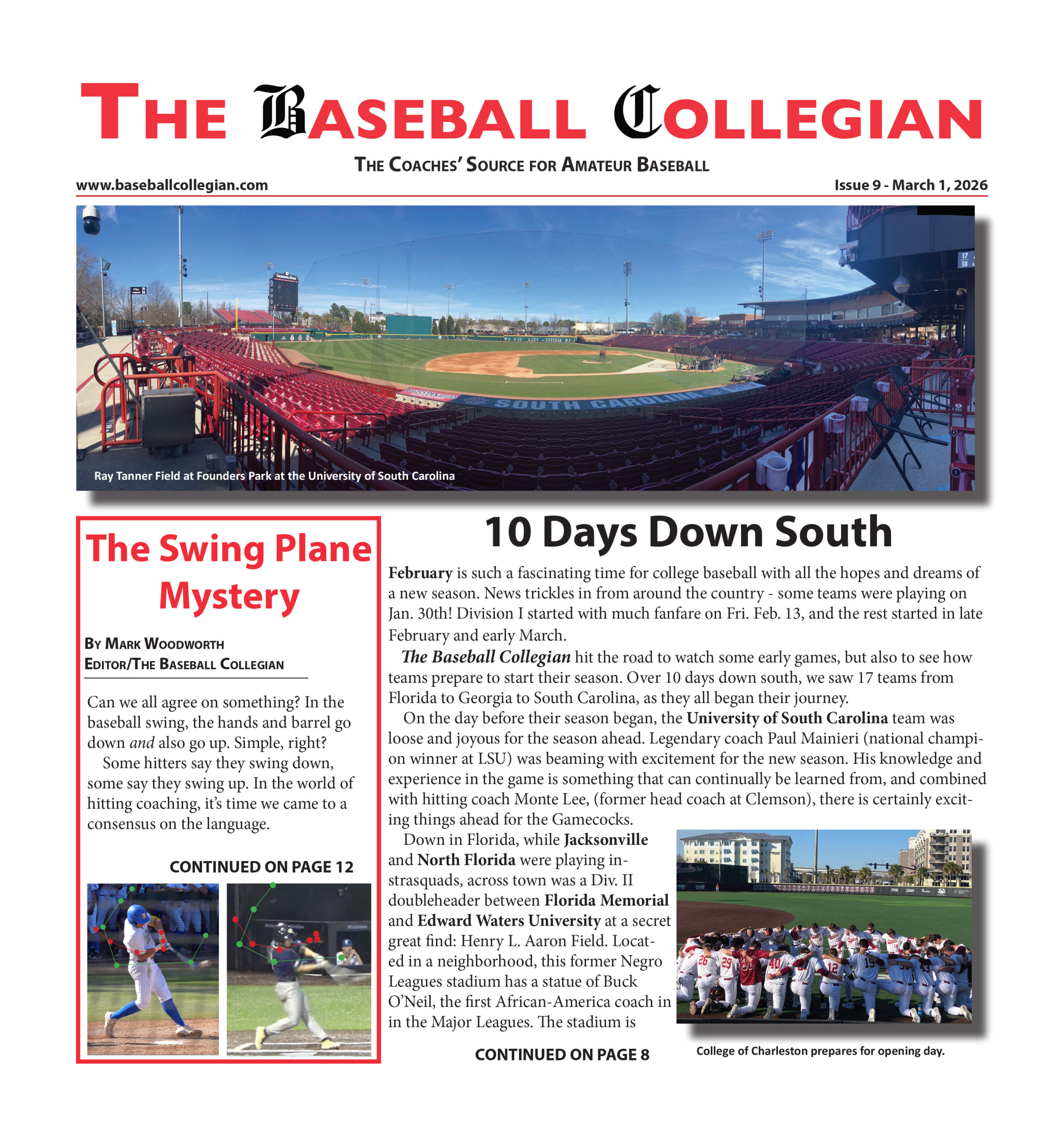
 Can we all agree on something? In the baseball swing, the hands and barrel go down and also go up. Simple, right?
Some hitters say they swing down, some say they swing up. In the world of hitting coaching, it’s time we came to a consensus on the language.
The problem in coaching swing plane is about being clear when the hands and barrel go down, and when they go up.
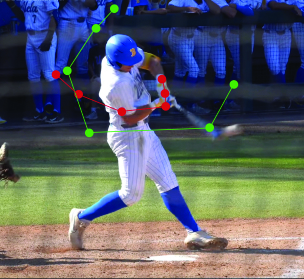
A breakdown of two of the top college hitters in the nation, Roch Cholowsky from UCLA and Drew Burress from Georgia Tech, are the models we can use.
It is clear that from the initial stance, the hands and barrel go down.
But notice that while the barrel is going down and back, the hands are going down and forward. That is because the hands are leading the way and pulling the trailing barrel behind it.
At some point, the barrel and hands bottom out. Cholowsky’s barrel bottoms out behind his back (right) hip, while Burress bottoms out at his back (right) hip.
From there, the barrel and hands of both hitters go slightly up. In MLB in 2025, MLB hitters swung an average of 8.59 degrees up at contact. The range was from an average of 18 degrees up (Cal Raleigh, Max Muncy, Zach Neto) to an average of 1 degree up (Vladimir Guerrero, Jr.).
Here are some other hitters and how much they swing up: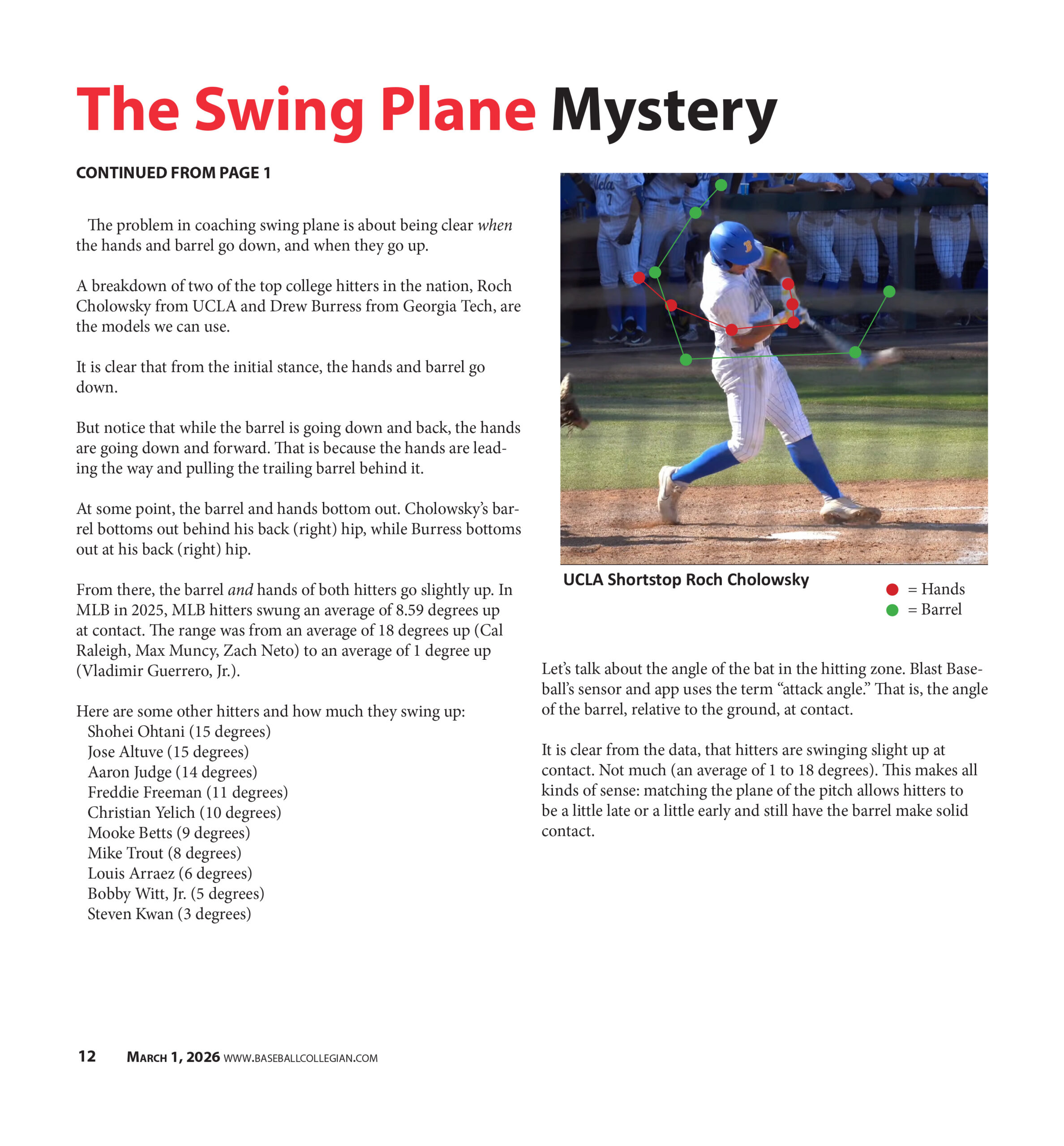
Shohei Ohtani (15 degrees)
Jose Altuve (15 degrees)
Aaron Judge (14 degrees)
Freddie Freeman (11 degrees)
Christian Yelich (10 degrees)
Mooke Betts (9 degrees)
Mike Trout (8 degrees)
Louis Arraez (6 degrees)
Bobby Witt, Jr. (5 degrees)
Steven Kwan (3 degrees)
Let’s talk about the angle of the bat in the hitting zone. Blast Baseball’s sensor and app uses the term “attack angle.” That is, the angle of the barrel, relative to the ground, at contact.
It is clear from the data, that hitters are swinging slight up at contact. Not much (an average of 1 to 18 degrees). This makes all kinds of sense: matching the plane of the pitch allows hitters to be a little late or a little early and still have the barrel make solid contact.
Here are the average angle a pitch drops as it crosses home plate.
Vertical Attack Angle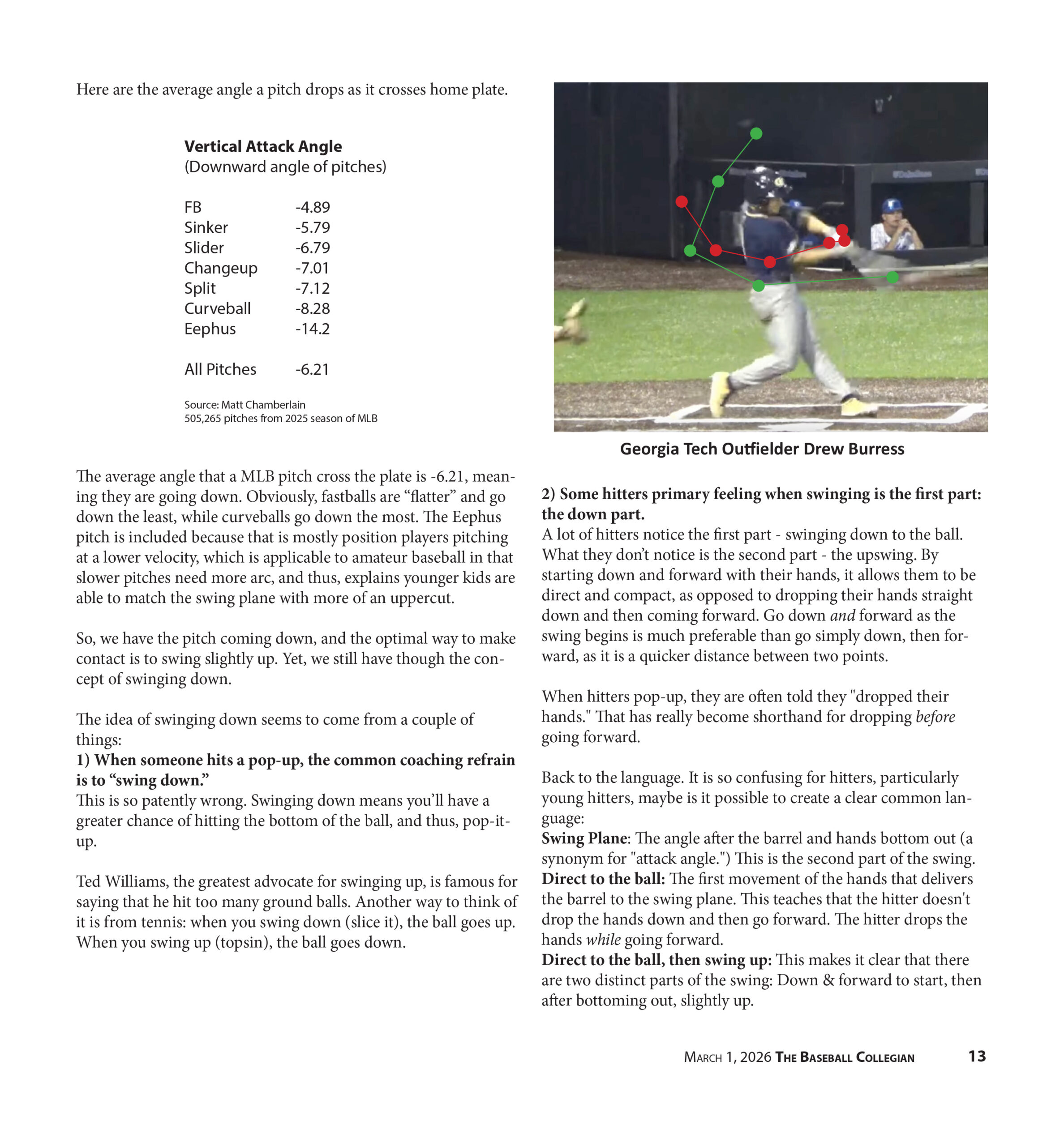
(Downward angle of pitches)
FB -4.89
Sinker -5.79
Slider -6.79
Changeup -7.01
Split -7.12
Curveball -8.28
Eephus -14.2
All Pitches -6.21
Source: Matt Chamberlain
505,265 pitches from 2025 season of MLB
The average angle that a MLB pitch cross the plate is -6.21, meaning they are going down. Obviously, fastballs are “flatter” and go down the least, while curveballs go down the most. The Eephus pitch is included because that is mostly position players pitching at a lower velocity, which is applicable to amateur baseball in that slower pitches need more arc, and thus, explains younger kids are able to match the swing plane with more of an uppercut.
So, we have the pitch coming down, and the optimal way to make contact is to swing slightly up. Yet, we still have though the concept of swinging down.
The idea of swinging down seems to come from a couple of things:
1) When someone hits a pop-up, the common coaching refrain is to “swing down.”
This is so patently wrong. Swinging down means you’ll have a greater chance of hitting the bottom of the ball, and thus, pop-it-up.
Ted Williams, the greatest advocate for swinging up, is famous for saying that he hit too many ground balls. Another way to think of it is from tennis: when you swing down (slice it), the ball goes up. When you swing up (topsin), the ball goes down.
2) Some hitters primary feeling when swinging is the first part: the down part.
A lot of hitters notice the first part – swinging down to the ball. What they don’t notice is the second part – the upswing. By starting down and forward with their hands, it allows them to be direct and compact, as opposed to dropping their hands straight down and then coming forward. Go down and forward as the swing begins is much preferable than go simply down, then forward, as it is a quicker distance between two points.
When hitters pop-up, they are often told they “dropped their hands.” That has really become shorthand for dropping before going forward.
Back to the language. It is so confusing for hitters, particularly young hitters, maybe is it possible to create a clear common language:
Swing Plane: The angle after the barrel and hands bottom out (a synonym for “attack angle.”) This is the second part of the swing.
Direct to the ball: The first movement of the hands that delivers the barrel to the swing plane. This teaches that the hitter doesn’t drop the hands down and then go forward. The hitter drops the hands while going forward.
Direct to the ball, then swing up: This makes it clear that there are two distinct parts of the swing: Down & forward to start, then after bottoming out, slightly up.
